I’ve been kayaking for about twelve years, and for eleven of those, I’ve been in a relationship with another kayaker, Tom. We are actually married now. My friend Lewis once joked, ‘So many guys wish their girlfriends loved kayaking as much as they do… but they should meet you two and see what it’s really like. They might realise that the grass isn’t always greener on the other side!’
On paper, being with someone who shares your passion sounds perfect. In reality, when that passion is white water kayaking; an all-consuming, time-hungry, rain-dependent obsession, it means your relationship is going to be dominated by it. You won’t be a ‘normal couple’ doing ‘normal couple things,’ and honestly, that’s mostly fine.
After more than a decade of paddling white water and loving someone who paddles too, here’s what I’ve learned about what it’s really like to be in a kayaking relationship.

Kayaking will not be a hobby but an obsession
Catching the ‘kayaking bug’ is no small thing. For many of us, white water kayaking stops being a hobby and becomes a full-blown obsession. It shapes your weekends, your friendships, your calendar, and sometimes your sanity. The adrenaline, the rapid progression you can make when you’re first starting, the incredible community… it’s intoxicating. I wrote a whole blog about why kayaking is so addictive and I still stand firmly in the ‘addicted to kayaking’ category. For the last twelve years, kayaking hasn’t been something I do but rather it is something my entire life revolves around.
A housemate once summed it up perfectly, ‘it’s what you live for – no wonder everything else comes second’.

Kayaking takes time. If you’re lucky enough to have a local run, maybe it’s just a couple of hours that it takes out of your day. Maybe you do that once a week. But if you travel for kayaking, which many of us do, suddenly you’re committing whole days, whole weekends, and sometimes whole weeks. You start prioritising kayaking over everything else, and you can become resentful of anything that pulls you away from the river.
And then there’s the rain. In the UK, good water levels often appear with little warning, which means committing to plans in advance becomes… difficult.

I’m okay to miss kayaking for important things such as close family birthdays, weddings or meaningful celebrations. But please don’t ask me to commit six months in advance to a casual dinner or a games night. In my head, those are day-before plans. Kayaking is the priority and so I prefer to keep my calendar as free of non-kayaking plans as I possibly can. This might just be a ‘Del’ thing but I do think a lot of white water kayakers share this sentiment!

Tom enjoys kayaking, but he doesn’t need it the way I do, and he’s happier with more variety in our calendar. Over time, we found our balance and it has meant that I often go kayaking without him. In the last 18 months, I’ve taken five bigger kayaking trips with friends while Tom stayed home or did other things. It works for us. He gets to do things in his life beyond kayaking and I get the river time I need. We don’t have to live in each other’s pockets.

The Kayaker Version of ‘High Maintenance’
People assume ‘high maintenance’ means expensive handbags, needing to wear designer clothes, or needing constant attention. But if you’re with someone who kayaks, especially someone who kayaks a lot, you’ll quickly learn that our version of high maintenance looks very different.
Firstly kayaking is expensive. We too dress head to foot in designer clothing – very well designed gear actually! It doesn’t come cheap. Then you add on the cost of petrol getting to and from the river, ferries or flights to different kayaking locations, and of course all the usual costs that come from travelling a lot such as accommodation and food.

Secondly, kayaking is a sport which has a lot of ‘faff’. It’s early starts, long drives, shuttles needing to be organised, kit drying everywhere, and a never ending game of ‘where did I put my helmet?’ Kayaking demands time, energy, money and the head space to organise sometimes complicated logistics.

This ‘faff’ is worth it because kayaking gives us joy and purpose. So if you are in a relationship with a kayaker, then you need to accept that they are going to be ‘high maintenance’. However the rewards of living this ‘high maintenance’ lifestyle are absolutely worth it.
They always say that the trick to happiness is to spend your money on experiences and not things… well that is kayaking in a nutshell. Sure – you are spending your money on kayaks and gear but that is to help you to have those quality experiences.

What I really find as well is that when you are paddling with your significant other, those shared experiences are so precious.

Kayaking is high risk – that means more when you love them
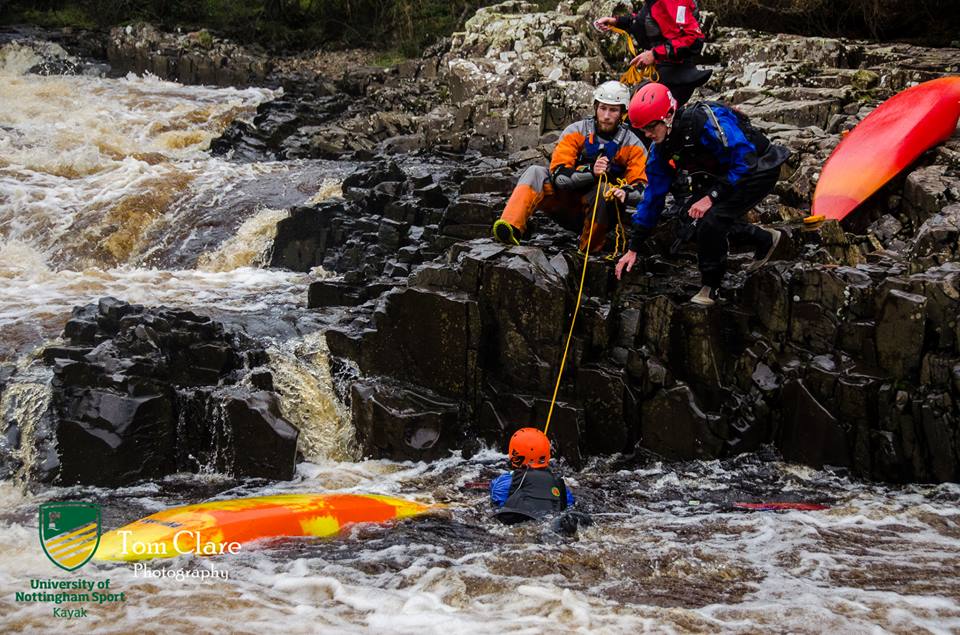
Kayaking is a high-risk sport, and being in a relationship with someone who kayaks means living with that reality. It can and does unfortunately sometimes go wrong and you will not find many experienced paddlers who haven’t sadly lost a friend to the river.
This risk means that kayaking can often be intense and sometimes quite emotional. Paddling with a romantic partner can heighten that intensity and actually sometimes be very stressful – especially when things go wrong.
Often in relationships, people want their spouses to feel the same excitement and passion that they do for their sport. Kayaking couples usually consist of either people who met through kayaking (which is how me and Tom met) or it is where one person has introduced the other person to the sport.
Either way, often one of the paddlers will be better at kayaking that the other and whilst that can be helpful as they can then help their spouse to learn and progress, it can also lead to an unintended imbalance in the relationship with one person feeling ‘responsible’ for the other.
This means that when things go wrong – it might be extremely stressful for the person holding that responsibility in a way that goes beyond that held by a normal river leader. It also might mean that the person struggles in making rational decisions on the river as they might be more emotional than they would be with someone else.

Tom is a better kayaker than me. He has been paddling since he was a young child. He is better technically than me, stronger than me and still has far more experience than I do. When he first met me, I had been kayaking for less than a year, had little in terms of skills or experience but was very enthusiastic.
Our relationship on the river has always had a degree of imbalance because of this. However, over the last decade we have moved from paddling together as a leader and a complete novice to being able to paddle as peers and often joint leaders. Tom is still better at kayaking than me but the dynamic between us has shifted hugely.

Over the years we have shared so many rivers together that of course we have shared some quite stressful and difficult moments on the river. Early on in our relationship, I imagine it was quite stressful for Tom who was constantly fishing me out and having to ‘look after’ me. I had no experience, understanding or skills. I trusted him completely and whilst I was okay with my swims, I think it was always hard for him to bear that responsibility.
As I gained skills and experience, I was still swimming but the consequences became higher. Sometimes the intensity of it would lead us to both be quite emotional afterwards and sometimes this would lead to arguments. Many of our close friends still bring up the time I swam on a high Upper Dart and a series of miscommunication between us led to us both walking out of the Dart and ultimately breaking up. (For about 24 hours anyway). You can read that article here.

We have grown lot together since our Dart break up days. I would argue that something we do well as a couple, and I would encourage you to do if you paddle with your spouse, is that we talk. We talk and we try to learn and we try to grow.
One of the things I love about kayaking is it often involves long drives and this means you get hours of uninterrupted time to talk with the people in your car. I love this time with Tom and over the years it has really helped us to deepen our relationship.

Now when things go wrong on the river, we always make sure to spend some time afterwards discussing it in depth, often on the drive home. It really helps if we are honest with each other but also try to keep things neutral. Whatever happened has already happened and the best you can do is to try and learn from the situation. It is you and your spouse vs. the problem instead of you vs your spouse.
We have both developed into pretty resilient people and our paddling relationship has grown into something beautiful. Because we communicate each time something bothers us on the river, we are now in a place where we are pretty in sync when kayaking. We know each other’s limits, what we will enjoy and how best to support each other.

Where things have gone wrong in recent years, we have been able to work as a team to combat it. We do a lot of paddling as a pair and therefore we rely on each other to be each other’s safety.
We had a trip to Scotland recently where we ended up doing a lot of leading together of quite a large group of padders. Years of experience kicked into practice and we got into a groove for the week as co-leaders. Afterwards, a friend who was on the trip said to me:
‘It was such a privilege to see two experienced leaders working together all week. I feel like I have learned so much just from watching the two of you and how you work together’.
It was a lovely thing to hear and I was glad that our relationship on the river seemed so positive. I think we are strong together on the water and this is because we have put 10 years of work into it.

If you want to be equal partners on the water with your romantic partner, you need to be willing to put the time in to reflect and grow together. Communicate clearly and learn from the bad experiences. A relationship is first and foremostly a friendship and like all good friendships, it takes time to develop.
Adventure replaces traditional holidays
When you’re in a relationship with a kayaker, ‘holiday’ stops meaning beaches, cocktails, and lazy mornings. It becomes early starts, long drives, wet kit, and the kind of exhaustion that feels strangely satisfying. You learn quickly that traditional holidays don’t always fit into a life shaped by rivers.

Myself and Tom have never been on ‘holiday’ together. Instead we go on trips, mostly kayaking but sometimes more widely adventure based. Tom doesn’t get a lot of annual leave and so we use the time we can have together wisely. Whilst our trips might not be ‘relaxing’, they are full of adventure and fun. Over the years, we have shared so many wonderful experiences together.

Our most recent adventure took us to New Zealand and we choose to approach this trip in ‘our way’. Our weeks were filled with kayaking, hiking, wild swims, side quests to hidden beaches and camping in the rain. We didn’t sign up to experience any of the more touristy activities that New Zealand is famous for such as boat tours to see dolphins or helicopter rides to see glaciers. Yet we had the most magical time, shaped by kayaking and chasing adventures.

Adventuring is a lifestyle and when you are with someone who matches your vibe and wants to experience life in the same way that you do, it really is wonderful. Being with a kayaker means your holidays will look different but they’ll also be richer and full of adventure stories you couldn’t get any other way.

Our love of adventures is also one of the reasons we got married in a storm in the Scottish highlands and ended up going kayaking on our wedding day. By most brides standards, that sounds horrendous. But for us, and our like minded friends in the outdoor community, it was the wedding of our dreams.

She Loves You – But She Loves Kayaking More
This always causes some ripples when I say it so let me explain it before you leave an angry comment!
I love kayaking more than I love my husband.

In response to that, someone once said to me ‘oh so you would let your husband die instead of giving up kayaking’. Well obviously not. But that is also not a choice that would ever need to be made and so it is an irrelevant comment to make.
However, if my husband ever made me choose between him and kayaking – then I would choose kayaking. I could not be with someone who couldn’t accept that this is more than just a hobby for me – it is central to my identity and wellbeing.

Kayaking isn’t just something I do. It’s the thing that grounds me, challenges me, excites me, and keeps me connected to myself. It’s the place where I feel most confident, most alive, and most like me. And when something gives you that much, it naturally becomes a priority.
That can be hard for a partner who doesn’t feel the same intensity. Tom enjoys kayaking, but he doesn’t need it the way I do. He doesn’t crave it.

Loving kayaking more doesn’t mean loving your partner less. It means loving something that makes you a better version of yourself and bringing that version into the relationship. It means being with someone who understands that passion isn’t a threat; it’s part of who you are.
And when you find a partner who gets that, who supports it, respects it, and sometimes even joins you in sharing that passion, the relationship becomes stronger, not weaker. You learn to balance love for the river with love for each other. You learn to make space for both.
And you realise that loving a kayaker means loving someone who loves deeply and that’s never a bad thing!

It is one of the reasons I actually realised that Tom was going to be my forever person. I had ditched him on valentines day for a weekend on the river and a friend commented ‘poor Tom, imagine playing second fiddle to a kayak’ to which he responded ‘I am happy to be the third wheel to her kayak if it makes her happy’.
We are not the perfect couple but I do strongly believe that we work incredibly well together because we support each other to be the best versions of ourselves and to live a life we are happy with.

Conclusion
Being in a relationship with a kayaker means choosing a life shaped by rivers, rain forecasts, and adventure. It isn’t always easy: the early starts, the risk, the obsession. But it is full of joy, growth, and moments you couldn’t get anywhere else.
Loving a kayaker means loving someone who is passionate and knows who they are and what they want from life. It does mean accepting that kayaking will always be part of the relationship, not a separate hobby that sits quietly in the background. But when you embrace that, you realise that the kayaking doesn’t take anything away from the relationship but instead it can add to it.
In the end, being with a kayaker means choosing a life that’s full of adventure and meaning. It is a life that allows for deeper connection to others that comes through shared experiences. And for me, that’s a life worth choosing every time. I wouldn’t trade that life for anything.
