Ever since Sal Montgomery was a little girl, she has been known for her adventurous spirit and her drive to live life to the fullest. For Sal, adventure is not something that you do but instead a way of a life.
Sal is a professional whitewater kayaker, expedition leader and adventure safety specialist. She has travelled through some of the world’s wildest environments, from Bhutan to Kamchatka, tackling unexplored rivers and supporting major TV expeditions alongside well known figures such as Steve Backshall and Bear Grylls.
I met Sal through kayaking many years ago and having cherished her infectious energy and positivity in my life ever since. I was delighted when she agreed to be involved in this blog so that I would be able to share a little of what makes Sal so special with you all.
This interview explores how Sal went from childhood adventures with the Scouts to leading world class expeditions. She opens up about the pivotal turning points in her life, overcoming injuries, her work as a member of Mountain Rescue and the mindset that keeps her chasing ‘the best day ever.’
Early Life: A Born Adventurer
Can you tell us a little bit about your early life?
Ever since I was very little, I’ve had this mischievous, adventurous streak. I am from Nottingham and whilst my family are amazing they are not outdoorsy at all. Even to this day, I am the only one who can swim in my family. For as long as I can remember, I have always wanted to explore. As a toddler, I would be climbing out of my crib, running around the house, hiding from my parents and grandma, and generally causing chaos. I was full of energy and I just wanted adventure.
To burn off some of my energy, my parents signed me up for Rainbows, Brownies, and then Guides… until I got kicked out for being ‘too adventurous.’ At this point, there were no girls Scouts groups near me but there was a boys Scouts group. Thankfully they kindly let me join them and it changed everything. They celebrated being adventurous and would encourage it. Suddenly I was learning to make fires, pitch tents, and head out on camps. I felt completely in my element.

Kayaking Journey
What was your first experience of kayaking?
Once a year, scout camp took place for a week in Nottingham, near Sherwood Forest. Here we would get to do all kinds of sports, including kayaking on a lake. It would only be for an hour or two but I LOVED it. I would go out, usually in a massive old beaten up kayak that was way to big for me and I never wanted to get off the water.

How did you start kayaking on whitewater?
I didn’t realise you could do all these sports as an adult, until I was 18. People around me weren’t outdoorsy and so I just assumed you could only do these things with the Scouts.
At 18, I rediscovered kayaking and from that moment, my life changed. I became OBSESSED with kayaking and wanted to do it all of the time! I trained at Holme Pierrepont (HPP) and started my whitewater journey through freestyle kayaking. I even got a weekend job there while studying at university. I would come back to Nottingham on a Friday night, work and paddle at HPP all weekend and then head back to university on the Sunday.

My focus was on freestyle but I wasn’t really into competition. I don’t like the pressure to perform that comes with competitions and everyone watching you. What I did enjoy was the kayaking and having a goal to to work towards which is what freestyle gave me.

How did you move into river running?
Friends eventually introduced me to river paddling and that’s when I got really obsessed. We would often go up to Yorkshire, paddling classics like the Swale. This river was where I was introduced to running waterfalls which I absolutely loved.
I loved the feeling of it being just you and your crew, exploring the river and working your way down it. You would all be looking out for each other; they’ve got your back and you’ve got theirs. You might actually might be really close to a town but it would often feel like you were someone super wild and remote because you know that there are certain places on the river which are completely inaccessible, except by kayak.

I spent a lot of time paddling around the UK, especially in Scotland. Particular highlights included paddling Inchree Waterfalls, the Falloch, the Nevis, the Etive and it’s tributaries and the Coe. So many great Scottish rivers! I also found the Dart down in Devon and would paddle on the Dart and the East Lyn a lot.
Like a lot of paddlers I then moved into paddling in Europe and South America and so on. I’ve paddled in the UK, all over Europe, New Zealand, Canada, America, Nepal, Bhutan, Russia (twice!), Argentina, Chile, Peru, Ecuador and Uganda just to name a few places.

Discovering Expedition Kayaking
How did you get into expedition kayaking?
As I got more into river paddling, I was introduced to expedition kayaking. At the time I was already drifting away from freestyle and was more focused on becoming a strong river paddler. I was still paddling at HPP a lot but I was using it as a training ground to hone my river running skills.
I trained hard, focusing not only on my paddling but also on how to be a strong member of a team. I was a lot smaller than my paddling friends and was often the only girl in the group. I knew that there were size and strength differences so I wanted to set myself up to be the very best that I could be. I worked on my fitness, my strength and my skillset. I made myself more knowledgeable on safety and how to enact rescues. I wanted to be someone that other people could rely on.

My first multiday expedition was in Nepal. The trip was supposed to be with friends, but unfortunately they dropped out. I’d spent a year dreaming about this trip and had already put time into planning it so I decided to go anyway.
I was terrified at first that perhaps I had made the wrong decision but it turned into one of the best experiences of my life. I safety kayaked for Paddle Nepal, joined a North Face documentary, won the Himalayan Championships in all four categories and just had so many great experiences. Whilst I met lots of great people on this trip, it was primarily a solo trip and it was my first big solo trip.
I ended up staying for two and a half months instead of the initial planned three weeks. When I came home, I was a completely different person- suddenly everything that I wanted from life was different. This trip was a game changer for me and my life became very different afterwards.

Recovering From Injuries & An Unexpected Call
You have experienced injuries from kayaking before, how did you deal with this experience?
Like many kayakers, I have had quite a few injuries over my time, particularly with my shoulder. The most significant injury I experienced was when I was trying to do a trick off a waterfall and it didn’t quite go to plan. I ended up completely messing up my shoulder and required a full reconstruction surgery. I tore through 2 rotator cuff muscles, pulled the cartilage off the inside of the joint and also chipped off a good chunk of bone as well, so it was a bit of a mess! After surgery, my arm was strapped to my chest for six weeks, and I lost all my strength. Unable to kayak, I was very grumpy during this time!

But it was just before the surgery that I had gotten a phone call….
This phone call was to say that a chap called Steve Backshall was putting together a team for a 10 part world first expedition television series. He needed some kayakers. Would I join?
OF COURSE I SAID YES!
I didn’t mention that I needed shoulder reconstruction surgery. All I heard was ‘do you want to go on a world first expedition? Everything will be organised for you. Everything will be paid for and you will even get a wage.’ and I thought – YES. THIS IS THE DREAM.
Luckily my surgery and recovery worked out and I was able to join for this expedition. It was one of the best decisions of my life. Having a goal to work toward during my recovery made the whole experience easier as well.

Career Changes: From Physiotherapist to Full Time Adventurer
How did you move from working as a physiotherapist to the work you do now?
As I found kayaking, I was just starting my physiotherapy training at university. For those 3 years, I was really focused on my studies. I was kayaking at the weekends but I was a bit limited to trips because of my university hours and placements. I went into the NHS after university.
After a couple of years, I was getting really into my kayaking and the trips were getting bigger and better. As my paddling progressed, I made my physio work more flexible and managed to juggle the two. When I was away on trips I would work on the river guiding and safety kayaking and then I would come back home to Nottingham and do some physiotherapy work to top up the adventure funds again.
As my kayaking progressed, I did less and less of the NHS work and more work on the river. I started paddling in Chile for the winters, working at Pucon Kayak Hostel. I was managing the hostel and the kayak school as well as my guiding and safety kayaking work.

I had just got back from another winter in Chile when I got that phone call about Steve’s expedition series. It was the best decision ever to say yes. The expedition trip was amazing and me and Steve found that we got on very well.
That decision to say yes also launched my TV career. That year we paddled in Bhutan but the following year we went on another expedition to Russia. I now work with Steve regularly, as well as other production companies, mainly doing adventure TV work.
This involves working on safety in remote locations. I work with Bear Grylls as part of his core safety team where we go to wild locations and build and test safety systems. It is exciting and we even get to ride out of helicopters which is always good fun!

If you had asked little Sal what she wanted to do when she was older, it would definitely involve kayaking on rivers, hanging out of helicopters, hanging from ropes and being in the mountains and jungles! I am happy.
That kind of work suits me much better than a hospital ward in the NHS. It wasn’t planned, I actually got up to management level as a physio and maybe I could have been quite rich by now! But my life took a detour and now my specialisms are very different. It was a round about way of getting here but I think I have finally found where I am supposed to be!
My physio background still helps as it gave me a good base level for progressing with all my field medicine and remote first response stuff. Knowing how to deal with severe injuries or illnesses whilst we are out in the field in these remote locations is important so I am always building on that, trying to do as much training as I can. Whilst I might not be doing a traditional ward based or clinic based physio job, it does come into my life regularly and so I am grateful for that.

Sal’s Top Tips for Training and Expedition Fitness
You are pretty fit sal – any top tips for training physically ahead of an expedition?
Train specifically would be my first piece of advice. Your expedition is going to have specific demands and you need to be able to meet them. For example, being able to pack and load your kayak, completing portages or being able to move yourself around on big water. You need to predict what the expedition might require of you and practice and train for that thing!
For example on my first trip to Russia, we were planning to kayak a river which we knew would have a 5km portage on it so a lot of my training for that trip was walking with my kayak! I would do laps around the regatta lake in Nottingham with my kayak strung to my back. It got my body used to it but it also got my mind used to managing that suffering. So get specific!
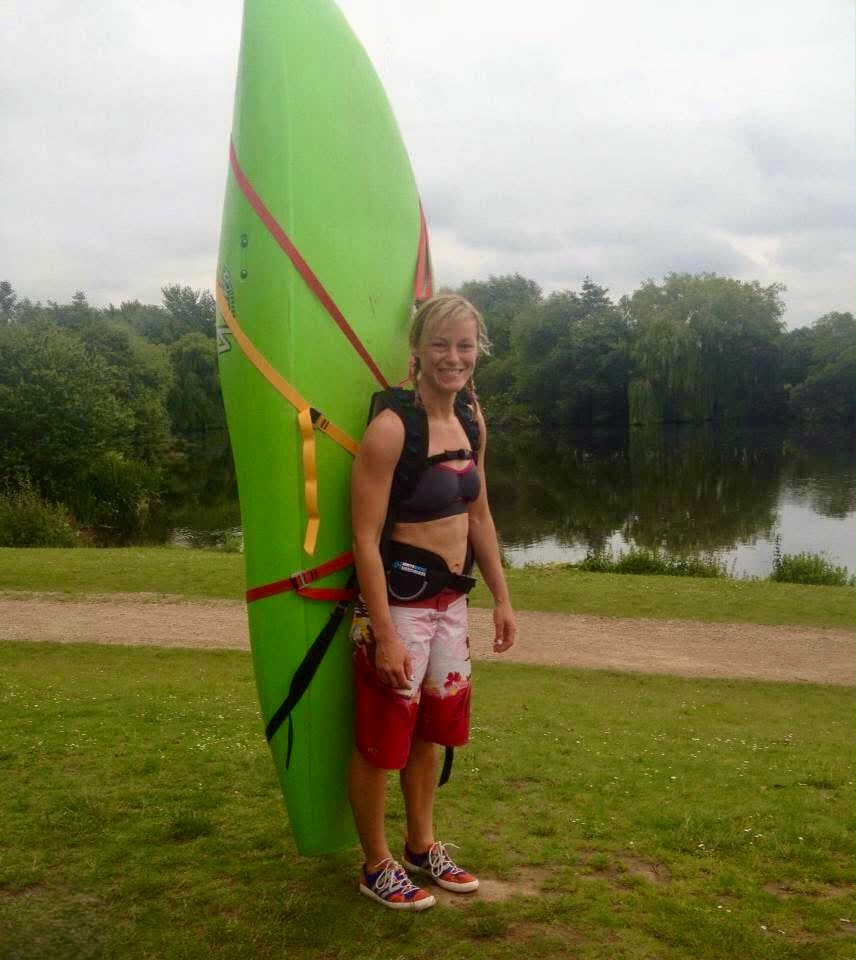
Practicing logistical things such as packing your kayak will save you time and energy too. On a trip you need to utilise daylight time as you don’t want to be caught out on the river in the dark. So any time you can save helps. Being efficient with packing your kayak (because you practised this) will help you here.
Building general strength is vital. You can do this through gym work but you can also get creative if you don’t have access to a gym. I travel a lot and so I like to do bodyweight training or even get creative with my environment. I have used boulders before to help with strength training!
Steve even got me into something he calls ‘animal flow’ which we do on tour. We find any space we can (a park, a car park, a dressing room) and mimic animal movements. It looks easy but is surprisingly difficult and does build strength!
Keep your fitness up! You can never be too fit – it just makes everything easier and more enjoyable. You paddle better if you are fitter and it preserves your energy. You then have those reserves when you need it most – for example when fighting your way out of a hole. It also just makes everything more fun – if you are not suffering the whole time, that is much better! Running, swimming, hiking and climbing are some of the things I really love for improving my fitness but anything you do will benefit you on expedition.

Focus on core strength to reduce the chances of injuries. A strong core and a trunk that works well will take some strain off your shoulders, which protects them.
Refining basic technique, especially your forward paddling will also help reduce the risk of injury.

Mountain Rescue: Being Part Of A Team & A Community
you have recently become a mountain rescue volunteer – how has this been?
When I moved to North Wales, I became a volunteer with the Llanberis Mountain Rescue Team, which is the busiest team in the UK. We respond to both minor and major incidents which could be helping people lost in the dark to serious medical emergencies and big falls. Last year we had about 300 call outs, which was the highest on record for any rescue team. This year, we have already gone well past this – I think we are on about 360 call outs and we are expecting to be over 400 by the end of the year which is pretty crazy.
I do love it and I love being part of a team and I think it goes back to what I loved about river boating. In a remote location, your team is everything. You are each others only source of help in what can be very challenging circumstances. I love that closeness that you get and the strong bonds that you form together. We are a big team and I feel that I have found a really great community and circle of teammates and friends from that. It is incredibly rewarding.

Favourite Days on the Water
Can you tell us about some of your favourite days on the river?
I’ve had so many ‘best days ever’ that it is hard to choose!
Chile with Eli
Paddling the Rio Claro in Chile with my good friend Eli. We both paddled it for the first time together a few years ago. Neither of us knew the river so obviously every twist and turn we had to work out together. It is a really special river and a special place so to experience that with him was definitely a ‘best day ever’.

Kamchatka with Steve
Going on the expeditions with Steve led to lots of best days ever, especially our first day of kayaking in Kamchatka where we were running the river source to sea. We got on at a glacial lake and we had only kayaked a few hundred meters downstream that we could hear our first rapid. I am at the front of the group and I come round the corner and immediately I am faced with our first grizzly bear and it was HUGE.

It surprised me quite a lot! The bear was river right but I couldn’t spend much time looking at it because I needed to work out where to go as we were fast approaching the horizon line of this rapid. I’ve got this massive bear to the right of me and as I am scanning where to go, I clock another huge bear on river! This time on river left half way down the rapid. It was a surreal but really cool moment.
The whole river and the whole trip were just incredible. We purposefully went to Kamchatka at salmon spawning season and so the river was just alive with salmon. Which obviously that brings all the bears to the river…

If you don’t know who Steve Backshall is, Steve is a wildlife presenter and also does a lot of adventure. There were a couple of big aims of this expedition. The first was to explore somewhere that humans had never been before. No one had ever kayaked down this river so it was awesome to do this. The additional achievement being that it was also a source to sea.
The second big aim of the trip was that we were there to document the bears and their habitat. We wanted to see how their habitat is changing and whether humans were having an impact on that. Every day we were seeing maybe thirty plus grizzly bears. They were often very close and this was pretty spectacular!

A Second Chance & A Renewed Appreciation of Life
What make a day a ‘best day ever’?
I actually had a very close call a few years ago where I essentially drowned. I got stuck and when I eventually came out, I had floated down the rest of the rapid face down. My friends very thankfully managed to pull me out and bring me round again.
It was a very close call and when I had recovered from that, I was just so appreciative. I felt like I had been given another chance at life in which I could have more adventure and more ‘best days ever’. So I started to change my mindset.
I don’t have to be in the gnarliest or the more exotic place in order to have the best day ever. There is going to be good in every day and every day on the river is a good day in my eyes. I now try to think of making every day the best day ever.

This has become especially important to me because we have lost some really special people in the paddling community. I know that if they were here, they would be making the very most of their life. They were such positive, energetic, amazing people to be around – such optimists. They have inspired me to appreciate this second chance and to appreciate all these extra days and opportunities I get to have another ‘best day ever’. I try to honour them by appreciating every day.
I have been to all these amazing places, I have had opportunities and adventures that I would never have even dreamed possible. But I am trying to make sure that I still notice the little things and that a normal standard day can still be amazing. I can be at home in North Wales, paddling my favourite local river with a bunch of pals and have the best day ever.

Recently, I paddled the River Spey with my friend Cal Major. It was a multiday adventure on paddleboards. She’d never paddled whitewater but is an experienced and accomplished paddleboarder. Meanwhile I had the whitewater experience but I’d barely touched a paddleboard. It was a trip of firsts for both of us.
It wasn’t a trip which had a distinct purpose, which was another new thing for both of us. We weren’t focused on achieving a first descent or a record attempt. Instead it was just all about having fun. Pure type one fun.
It was a trip full of sunshine, snacks, wildlife, cafe stops and beautiful campsites. It reminded us that adventure doesn’t always need to be extreme or include some kind of suffering. Sometimes you can go on a trip just to go out to have fun. Every day we said to each other ‘thanks for another best day ever!’
I will still be doing those bigger adventures but I am keen to add more type 1 fun into my life!

Thank you Sal
A huge thank you to Sal for sharing her story with such honesty and humility. Sal’s energy is infectious as is her positivity. Her love for adventure is a reminder of how much joy there is to be found in the outdoors. I’m incredibly grateful for her time for this article and for having her as a friend in my life. I hope that her story encourages you to chase your own ‘best day ever’ and take every opportunity that life presents you.
Thank you Sal.
